
Best Bait Scissors for Sea Fishing: What Matters
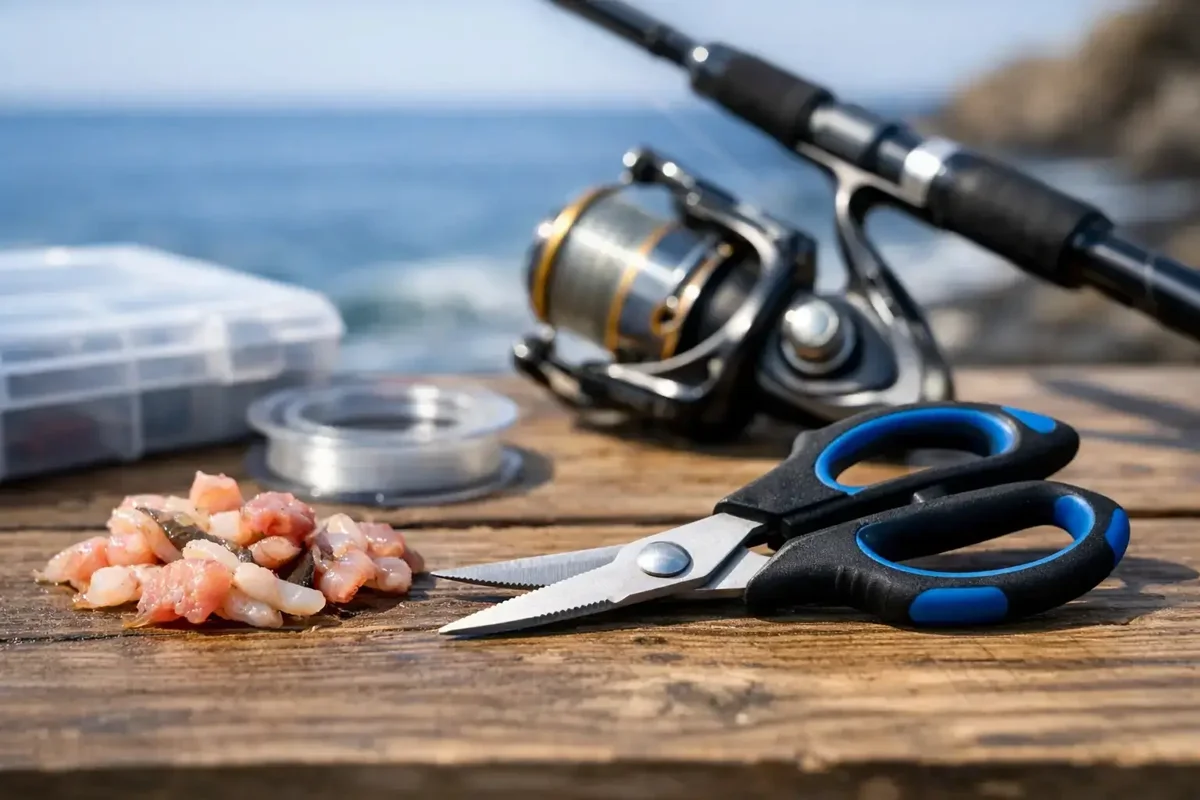
A pair of scissors can be the difference between a neat strip of squid that stays on the hook and a cold, messy struggle on the shingle. The best bait scissors sea fishing anglers choose are not necessarily the biggest or sharpest-looking pair. They need to cut reliably with wet hands, cope with saltwater exposure and make quick work of the bait you actually use.
For UK shore and boat anglers, bait scissors are a small but worthwhile part of the tackle box. They save time when preparing mackerel, squid, sandeel, ragworm, lugworm or peeler crab, and they are far safer than trying to make every cut with a bait knife on an unsteady rock or rolling deck. The right pair should feel like useful fishing kit, not household scissors that happened to be nearby.
Choosing the best bait scissors for sea fishing
Start with the jobs you want them to do. If you mainly fish clean beaches with squid, sandeel and strips of mackerel, a compact pair with fine, sharp blades is usually ideal. They let you trim bait to match the hook size, create slim bait strips and remove tough squid wings or heads without crushing the bait.
For rough-ground fishing, where tougher baits and larger hooks are more common, stronger scissors are often the better choice. You may be cutting mackerel backbones, crab legs, elastic thread or bait packaging as well as preparing hook baits. A sturdier blade and a stronger pivot make a noticeable difference over a long session.
There is no single answer for every angler. Fine-bladed scissors give more control, while heavier-duty models cope better with hard bait and general tackle-side jobs. If you fish a mixture of marks and species, choose an all-round pair rather than an ultra-light specialist design.
Blade material matters in saltwater
Salt is hard on metal. Even stainless steel can show surface corrosion if it is left wet in a tackle bag for weeks, particularly around the hinge. Look for bait scissors made with corrosion-resistant stainless steel, and do not assume that means they need no care.
A quick rinse in fresh water after a trip is enough for most anglers. Open and close the blades under the tap, dry them properly, then leave the scissors slightly open before storing them. A small drop of suitable oil at the pivot from time to time keeps the action smooth. This takes less than a minute and can make a modestly priced pair last far longer.
Some scissors use coated blades. These can add protection and reduce glare, but coating should not be the main buying decision. What counts is whether the blades stay sharp, align correctly and continue to move freely after regular use.
Serrated or plain blades?
Serrated blades have a proper place in sea fishing. The small teeth grip slippery bait, which is useful when cutting squid, oily mackerel or soft fish strips with cold hands. They can also help when trimming bait elastic. For anglers who regularly prepare several baits at the water's edge, serrations reduce the chance of the bait sliding away from the cut.
Plain blades give the cleanest cut and are easier to wipe down. They suit delicate work, such as shaping narrow squid strips for flatfish or trimming worm baits neatly. A plain blade is also simpler to sharpen, although many inexpensive bait scissors are more practically replaced than professionally sharpened.
A combination design, with one serrated blade and one plain blade, is often the most versatile option. It provides grip without making every cut ragged. For most general sea angling, this is a sensible middle ground.
Handle comfort is not a minor detail
You will notice poor handles long before you wear out the blades. Sea fishing often means working in wind, rain and low temperatures, with hands that are wet, sandy or covered in bait scent. Small, smooth handles can become awkward quickly.
Choose scissors with finger holes large enough to use while wearing thin gloves, or with shaped soft-grip handles that remain secure when wet. Brightly coloured handles are useful too. A black pair dropped among bladderwrack, sand or a dark tackle tray can disappear surprisingly fast, while orange or yellow handles are easy to spot.
Spring-loaded scissors are worth considering for anglers with reduced hand strength or anyone preparing a lot of bait. They reopen automatically after each cut, reducing repetitive strain. The trade-off is another moving part that can collect grit or become less reliable if neglected. For simple, dependable shore kit, conventional handles remain hard to beat.
The cuts that make bait fish better
Good bait preparation is about more than making pieces smaller. Scissors allow you to make cleaner, more purposeful cuts that help bait look natural and sit correctly on the hook.
With squid, cut long, tapered strips rather than chunky squares for species such as whiting, dabs and flatfish. Leave a slightly thicker end to take the hook point and taper the tail so it moves in the tide. For bigger codling or rays, broader squid strips or a whole squid head may be more suitable, depending on the hook pattern and the ground.
For mackerel, cut strips across the flank to include bright skin and oily flesh. A narrow strip can be a very effective cocktail bait with worm, while a thicker section may suit a larger single-hook presentation. Scissors make it easier to avoid hacking through the bait, which can leave weak, torn pieces that fly off when casting.
When using crab, scissors are particularly handy for trimming claws, legs and shell fragments. For peeled crab, neat preparation helps you present a streamlined bait and secure it with elastic without turning it into a compressed lump. Keep the scissors clean between bait types if possible, especially when switching from oily fish to delicate worm baits.
Keep scissors handy, but safely stored
The best place for bait scissors is where you can reach them without rummaging through the main tackle box. A designated pocket on a bait apron, tackle bag or waist pack works well. Some anglers use a retractable lanyard, which is practical on a boat or pier where dropped tools are likely to be lost for good.
Do not leave uncovered scissors loose beside hooks, leads and rigs. Apart from dulling the blades, this makes them harder to find when you need them quickly. A basic blade cover or a compartment in your tackle box is usually sufficient. If the scissors have very pointed tips, safe storage matters even more when children are nearby.
It is also worth keeping a separate pair for bait preparation. Using the same scissors for braid, wire trace and bait will dull them sooner. Braid and fine mono are better dealt with using dedicated line cutters or general fishing scissors, while bait scissors stay cleaner and sharper for their main job.
What to avoid when buying bait scissors
Very cheap, unbranded scissors can be tempting as a spare, but check the hinge and blade alignment before relying on them. If the blades wobble, catch, or leave soft bait pinched rather than cut, they will soon become frustrating. Equally, avoid overly bulky kitchen-style shears unless you genuinely need them for large baits. They take up valuable room and can be clumsy with smaller hook baits.
Do not buy solely on the promise of a multi-tool. Added features such as bottle openers, scales and pliers may be useful, but they can make the tool heavier and less comfortable as scissors. A straightforward, corrosion-resistant pair that cuts well is normally better value than a complicated tool with several average functions.
For anglers putting together a practical sea fishing kit, bait scissors deserve the same consideration as hooks, bait elastic and a reliable disgorger. They are inexpensive, easy to overlook and used far more often than expected. Choose a pair that suits your usual bait and fishing style, rinse them after each trip, and they will make every session at the shore or afloat that bit more efficient.




Thank you for posting your blog comment. It will be reviewed and set live soon. If you provided your email then you will be notified of replies to this comment.