


Best Fishing Tackle Organiser for Every Session
Best Fishing Tackle Organiser for Every Session
Thursday, September 17, 2026 - 0 Comments
Posted by Mick
Best Fishing Tackle Organiser for Every Session
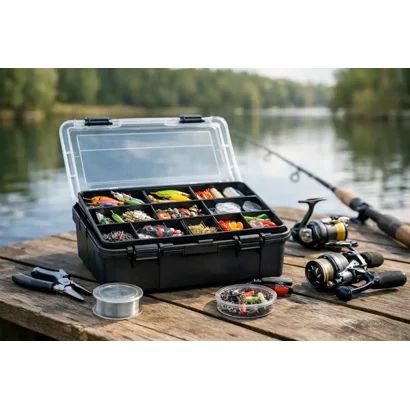
A tackle organiser earns its place when you can reach the right hook, swivel or feeder without emptying half your bag onto wet grass. It is easy to buy the biggest box available, but the best fishing tackle organiser is the one that suits the way you fish, carries the items you genuinely use and keeps delicate tackle protected between sessions.
For UK anglers, that usually means looking beyond simple capacity. A compact lure angler walking a canal needs something very different from a carp angler setting up for two nights, or a coarse angler travelling light for an evening on the local lake. Getting the layout right saves time at the bank and makes it far less likely that small terminal tackle disappears into the bottom of a holdall.
What makes the best fishing tackle organiser?
A good organiser should separate your tackle clearly, shut securely and stand up to regular use around water, mud and gravel. The best choice is rarely a single large box. Most anglers are better served by a sensible combination: a main bag or carryall for larger items, plus compartment boxes for the tackle that needs sorting.
Start with the kit you use most often. If you regularly carry hooks, shot, swivels, beads, stops and quick-change attachments, choose a shallow organiser with plenty of adjustable compartments. This makes it easier to separate sizes and avoids having several packets loose in one section. For leads, feeders and larger accessories, a deeper box with stronger dividers is more practical.
The catch is that more compartments are not always better. Very small sections are excellent for hooks and beads but frustrating for bulkier items. A layout with moveable dividers gives you more flexibility as your fishing changes through the season.
Secure catches matter more than they seem
A box that opens in the car boot or tips into a swim is a nuisance no angler needs. Check that the catches close positively and that the lid does not flex easily. A transparent lid is useful for spotting what is inside at a glance, particularly when you keep several similar boxes in a bag.
Water resistance is also worth considering. Few organisers are fully waterproof once opened and used on the bank, but a well-fitting lid helps protect hooks from damp and keeps packets, PVA accessories and small tackle in better order. Dry your boxes after a wet session rather than leaving them sealed in a damp bag, as moisture soon leads to rusted hooks and tired tackle.
Choose the right organiser for your fishing
The best fishing tackle organiser depends heavily on the discipline. Buying for your actual sessions, not an idealised future trip, keeps your kit lighter and your spend sensible.
Predator and lure fishing
Lure anglers need quick access and secure separation. Hard lures with exposed hooks can scratch finishes, snag each other and become a tangled mess if they share a large open compartment. Purpose-made lure boxes with individual spaces are a sensible choice, especially for plugs, jerkbaits and crankbaits.
Soft plastics need slightly different treatment. Keep them in their original packets where possible, particularly if different plastics may react when stored together. A slim box or wallet for jig heads, clips and leaders completes a compact mobile set-up that is easy to carry while moving along a river or towpath.
Sea fishing
Saltwater is hard on tackle, so durability and maintenance come first. Look for sturdy catches, solid hinges and compartments large enough for clips, swivels, beads and heavier rigs. Rinse any organiser exposed to salt spray with fresh water and allow it to dry fully after each trip.
Long items such as pirks, feathers and pre-made rigs may be better stored in dedicated wallets or tubes than forced into a standard compartment box. The right format prevents line kinks and protects hooks from damage.
Bag, box, wallet or tray?
There is no single organiser style that covers every job. A rigid tackle box offers strong protection and a clear layout, but can be bulky on a walk to the water. A tackle bag with removable boxes is more versatile, particularly for anglers who fish several methods. It also leaves room for scales, forceps, line, a flask and other essentials.
Wallets are best for flat or pre-tied tackle. They take up little space and are useful for hooklengths, rigs, leaders and small packets. Open trays are handy when setting up on a stable platform or bivvy table, but are less suitable in wind, rain or uneven ground.
If you mainly fish short sessions, a small shoulder bag containing two or three well-organised boxes is often enough. For all-day or overnight fishing, a larger bag with a structured organiser inside gives better access without turning every trip into a packing exercise.
Build a layout you can use at the bank
Good organisation is not about making every compartment look perfect at home. It is about finding what you need with cold hands, fading light or rain on the lid. Label boxes if you carry several, especially when their contents are not obvious through the top.
Keep your most-used items together. For example, hooks, swivels, stops and scissors belong within easy reach if you are tying rigs regularly. Put spares and occasional-use items in a separate box. This reduces clutter in the organiser you open most often.
It also pays to leave a little spare room. New packets, a few spare leads or tackle picked up before a trip should have somewhere to go. Packing every compartment tightly makes a box harder to close and encourages loose items to migrate when you are in a hurry.
For small terminal tackle, use the original labelled packets inside larger compartments if the box allows. You retain the hook size, breaking strain or product information, which avoids guesswork months later. Loose hooks and swivels may look tidy in a clear box, but they are less useful if you can no longer identify them accurately.
Durability, weight and value
The heaviest-duty organiser is not automatically the best value. Thick plastic and reinforced latches are worthwhile for carping, sea fishing and regular travel, but they add weight. A lighter organiser can be the better choice for stalking, lure fishing or any session where you cover ground.
Pay attention to hinges and dividers. These are the parts that tend to fail first. Firm dividers stop smaller items slipping between sections, while hinges should feel secure without being difficult to operate. If a box uses removable dividers, test the arrangement with your own tackle rather than judging it by empty compartments.
Buying a few compatible boxes can be more economical than replacing a large, poorly designed organiser. It lets you build a system gradually and replace only the section that no longer suits your fishing. That is often better value than carrying a large box full of tackle you rarely touch.
A simple way to keep tackle under control
After each session, remove any damp items, return loose tackle to its section and replace anything you have used up. It takes a few minutes, but it stops small jobs building into a full reorganisation before the next trip. Check hook points, discard damaged components and make a short note of what needs replacing.
At Astute Angling Salt, the most useful choice is always the one that fits the way you fish. Start with a dependable organiser for your core terminal tackle, then add boxes or wallets only when your kit genuinely needs them. A tidy, practical set-up means less time searching through tackle and more time watching the tip, float or rod top.
Optional, for replies
No comments posted yet, check back soon.


