
Best Sea Fishing Pliers for Saltwater Anglers
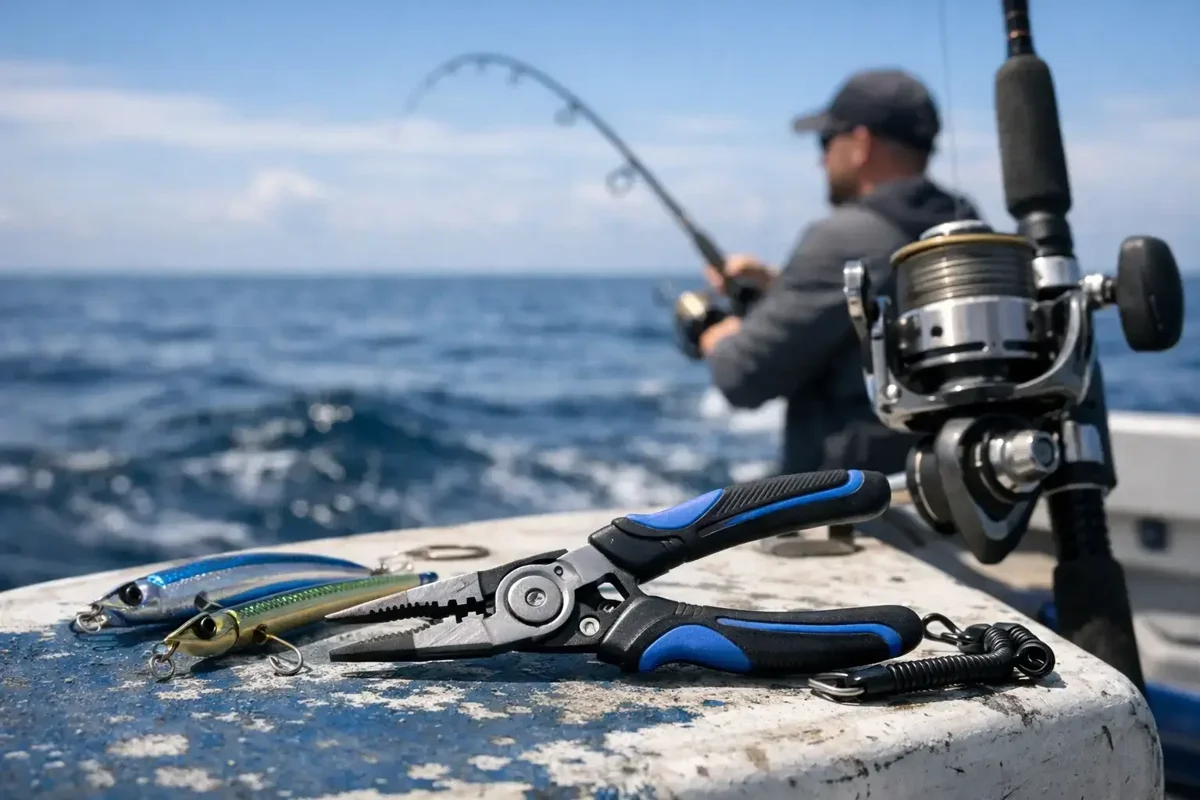
A pair of pliers can be the difference between a quick hook removal and a frustrating job with cold fingers, a lively fish and a trace tangled around everything. The best sea fishing pliers are not simply the biggest pair in the tackle box. They need to cope with saltwater, reach hooks safely, cut the materials you actually use and remain easy to handle when wet.
For UK shore, pier, rock and boat anglers, that usually means choosing practical corrosion resistance and useful jaw design over gimmicks. Here is what to look for before adding a pair to your sea fishing kit.
What makes the best sea fishing pliers?
Saltwater is hard on equipment. A standard steel pair of pliers may look fine after a few trips, then stiffen up or develop rust around the pivot. A proper sea fishing pair should be made from stainless steel, aluminium or another corrosion-resistant material, ideally with a protective coating and stainless components where it matters.
Stainless steel pliers are generally the sensible all-round choice. They are strong, have enough weight to feel secure in the hand and cope well with hook removal, split rings and general rig work. The quality of the steel still matters, though. Basic stainless can stain or seize if it is never rinsed, particularly after regular sessions on the beach or in a boat.
Aluminium pliers are lighter and naturally resist corrosion well. They suit anglers who want long-nose pliers for lure fishing, unhooking and carrying on a belt or lanyard. The trade-off is that lightweight aluminium models are not always the best choice for heavy cutting jobs or twisting out large, deeply embedded hooks. For general sea angling, a well-made stainless pair is often better value.
The pivot is worth checking too. A smooth-action hinge makes a noticeable difference when you are working one-handed. Some pliers use a spring-loaded mechanism to open the jaws after each squeeze. This is useful when handling a fish or holding a trace in the other hand, but it is another moving part that needs rinsing and occasional care.
Choose the jaw shape for the fishing you do
Long-nose jaws are the most useful shape for many sea anglers. They give extra reach when removing hooks from a bass, pollack, dogfish or flatfish, while keeping your fingers away from teeth, spines and treble hooks. A slim nose also makes it easier to work around baited rigs and tight spaces.
For general shore fishing, aim for a length that offers reach without becoming awkward in a tackle bag. Pliers around 6 to 8 inches long suit most jobs. Very long forceps-style tools can be useful when fish are deeply hooked, but they are not a replacement for a sturdy pair of pliers with proper gripping jaws.
Flat or serrated jaws offer more purchase on hooks, swivels and crimps. This matters if you fish heavier traces for rays, smoothhound, conger or larger species, where components can be tougher and hooks thicker in the wire. Serrations should grip firmly without being so aggressive that they damage a fine lure hook or crush a delicate split ring.
If you fish with lures, look for narrow tips and a section designed for split rings. Opening split rings with fingernails is slow, uncomfortable and likely to end in a lost ring in the shingle. A built-in split-ring nose is a genuinely useful feature for changing hooks, fitting assist hooks or replacing corroded hardware on plugs and metal lures.
Cutting ability matters more than it sounds
Not every built-in cutter will handle every line. This catches out plenty of anglers. A cutter that goes through monofilament easily may struggle with braid, while a pair intended for light braid may not be suited to thick wire trace.
For most sea fishing, hardened side cutters are the most useful option. They should cleanly cut mono, fluorocarbon and braided main line without flattening the line first. If you regularly use wire for toothy species, make sure the manufacturer specifically states that the cutters are suitable for wire. Cutting heavy wire with the wrong pliers can blunt or chip the cutting edges surprisingly quickly.
It can also make sense to carry two tools. Keep your main pliers for hook removal and line cutting, then use a smaller, tougher cutter for wire trace or heavy rig components. That approach costs little extra and avoids wearing out the feature you rely on most.
Handles, grip and retention on the shore
A good pair of sea fishing pliers should not feel slippery. Rubberised or textured handles make a real difference when your hands are wet, covered in bait or cold after a few hours on an exposed beach. Brightly coloured handles are useful too. Black tools disappear quickly in sand, weed and the bottom of a dark tackle bag.
A lanyard attachment point is one of the most practical details to look for. Dropping pliers from a pier, breakwater or boat is common enough, and losing them on rocks can end a session early. A coiled lanyard gives freedom to work while keeping the tool close at hand. On the shore, a simple tool tether clipped to a belt, fishing jacket or tackle box is often enough.
Avoid choosing a pair purely because they are extremely compact. Small pliers can be handy for light lure fishing, but they give less leverage on larger hooks and can be uncomfortable with gloves on. Equally, oversized pliers are unnecessary for a light estuary session. Match the tool to the likely work rather than buying the largest option available.
Useful extras, and features you can leave behind
Some sea fishing pliers include crimping sections, knot tools, split-ring tips, line cutters and sheath systems. These features can be worthwhile when they suit your fishing, but more functions do not automatically mean a better tool.
A crimping section is useful for anglers making wire traces or heavy-duty rigs. It needs to match the type and size of crimps being used. A poorly shaped crimper can produce weak joins, so it is better to use a dedicated crimping tool if you build a lot of traces for pike, tope or large saltwater species.
A sheath protects both the pliers and everything else in your kit. It is particularly handy for lure anglers who want the tool ready on a belt. Check that the sheath retains the pliers securely but does not make them awkward to draw with one hand. A poor-fitting sheath is more nuisance than help.
Multi-tools are tempting, but saltwater fishing is one area where simple is often better. A strong nose, reliable cutters, comfortable grips and a corrosion-resistant finish will serve most anglers better than a tool covered in functions they never use.
Looking after sea fishing pliers
Even the best corrosion-resistant pliers benefit from a minute of care after a session. Rinse them in fresh water, open and close the jaws a few times, then dry them before putting them away. This removes salt from the pivot and cutters, where corrosion usually starts.
Every so often, add a small drop of suitable light oil to the hinge and wipe away the excess. Do not leave them wet in a sealed tackle box or buried beneath damp towels and bait packets. If the cutters start struggling with braid, inspect them for nicks before assuming the line is the problem.
This routine is particularly worthwhile after boat fishing, when spray and saltwater tend to get into every piece of kit. It also makes a budget-friendly pair last considerably longer.
A practical buying checklist
Before choosing, think about where and how you fish. For a general shore angler, medium-length stainless long-nose pliers with braid-capable cutters, textured handles and a lanyard point cover nearly every routine job. For lure fishing, lighter aluminium pliers with a split-ring feature can be a better fit. For heavier rigs and larger hooks, prioritise strength, leverage and jaws that grip securely.
At Astute Angling-Saltwater, the useful question is not whether a pair looks impressive on the workbench. It is whether it will cut your line cleanly, remove a hook safely and still open smoothly after a season on the coast.
Buy the pair that suits your usual fishing first, rinse it after every session and keep it where you can reach it. When a fish is on the shingle or beside the boat, dependable pliers earn their place far more quickly than any fancy addition to the tackle box.




Thank you for posting your blog comment. It will be reviewed and set live soon. If you provided your email then you will be notified of replies to this comment.