
How to Set Up Sea Rigs for UK Shore Fishing
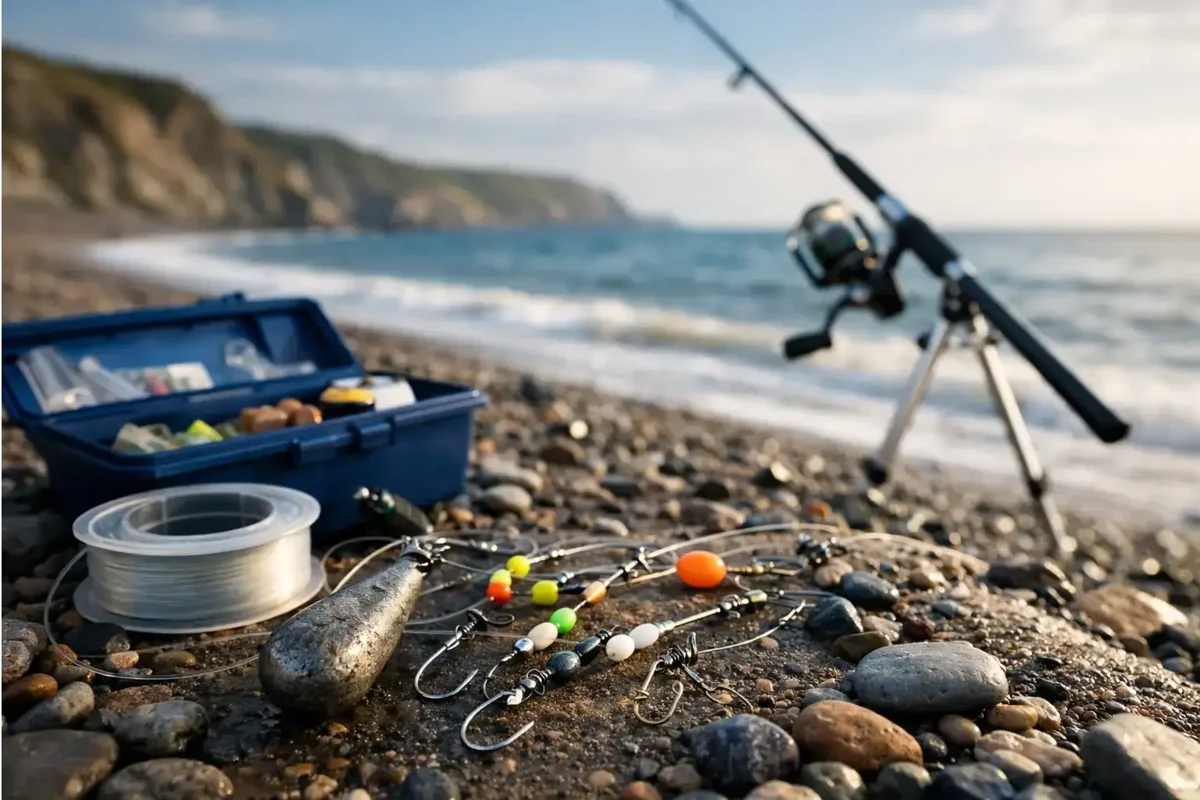
A sea rig does not need to be complicated to catch fish. In fact, when learning how to set up sea rigs, a neat, well-matched basic rig will usually serve you better than a tangle of clips, beads and heavy hardware. The aim is simple: present the bait naturally, keep it on the bottom or at the depth where fish are feeding, and cast without the rig twisting around itself.
For UK shore fishing, the best starting point is to match your rig to the venue, tide, target species and sea conditions. A quiet estuary calls for a different approach from a rough beach, while a rig for flounder or whiting is not necessarily the right one for a larger cod, bass or ray.
Start with the right sea fishing tackle
Before tying anything, make sure the main parts suit one another. Your rod, reel line, lead weight, trace material and hooks all need to work as a system. A powerful beachcaster and fixed-spool or multiplier reel are useful for distance and heavier leads, but lighter bass and estuary fishing can often be done with more modest tackle.
Most shore anglers use a shockleader when casting a lead. This is a heavier length of line joined to your main line, designed to take the strain of the cast. It should be long enough to give several turns around the reel spool and reach beyond the rod tip when you cast. This is particularly important when using 4oz to 6oz leads. Never cast a heavy lead on light main line alone.
For a straightforward setup, use a swivel at the end of the main line or shockleader, then attach the rig with a clip. This means you can change from a two-hook flapper to a pulley rig without cutting back and rebuilding your whole setup.
You will generally need four core items for rig building:
- trace line or rig body material in suitable breaking strain
- good-quality swivels, clips and beads
- hooks suited to the bait and fish you expect to catch
- plain or grip leads matched to tide and conditions
Buy sensible quantities of the sizes you use most. Lost rigs and damaged traces are part of sea fishing, especially around rough ground, so having spare components in the tackle bag saves a trip being cut short.
How to set up sea rigs for the ground you are fishing
The seabed dictates much of your rig choice. Over clean sand, a simple two-hook flapper rig is easy to cast, quick to make and ideal for species such as whiting, dab, flounder, dogfish and smaller codling. It carries two short hook traces, known as snoods, that stand away from the rig body and allow you to fish two baits at once.
To build one, cut a length of heavier rig body line, around 24 to 36 inches depending on how long you want the rig. Tie a swivel at the top for connecting to the main line and a lead clip or swivel at the bottom. Add two snood attachments along the rig body, spaced far enough apart that the hooks cannot easily reach each other. Beads above and below each attachment help protect the knot and stop the components sliding.
Tie your snoods from lighter line than the rig body. A 12lb to 20lb snood is often adequate for smaller fish over clean ground, while 20lb to 30lb gives more security for bigger baits and stronger species. Keep the snoods fairly short when conditions are rough or casting is difficult. Longer snoods can improve bait movement in calm water, but they are more likely to tangle.
For mixed and rough ground, a pulley rig is a better choice. Its key advantage is that, when a fish is hooked, the lead can lift away from the seabed as you retrieve. This reduces the chance of the lead dragging through snags and can make landing a decent fish more straightforward.
A pulley rig has a clipped hook length for casting, a sliding pulley bead or swivel arrangement, and a short weak link to the lead. The weak link matters. If the lead catches in kelp or rocks, you want to lose the lead before losing the whole rig and fish. Use a lighter section of line for this part, but do not make it so light that it breaks on every cast.
Choose hook size by bait, not guesswork
Hook choice is one of the most common causes of missed bites. A hook that is too large can make a small worm bait look unnatural and leave little point exposed. One that is too small may not hold a large strip of squid, crab or mackerel properly.
For smaller baits such as ragworm, lugworm and small strips of mackerel, sizes 4 to 1 are useful starting points. A size 1/0 to 3/0 suits larger worm cocktails, squid, fish strips and peeler crab baits. Bigger hooks have their place for larger rays, smoothhounds and cod, but there is little benefit in oversizing them for every beach session.
The hook pattern matters too. Aberdeen-style hooks are popular for worms, while stronger patterns are useful for crab, squid and larger fish baits. Keep the hook point clear once baited. If it is buried in a bulky bait, a fish may pull the bait free without being hooked.
When threading worms, use a baiting needle where possible and secure the bait with elastic thread if the cast is hard or the crabs are active. Bait elastic should hold everything together without being wound tightly over the hook point.
Match the lead to the tide and weather
A lead that will not hold bottom leaves your bait rolling around the beach, often tangling the rig or moving it away from the fish. Plain bomb or beach leads are suitable in gentle tides and calm water. Grip leads, sometimes called breakaway leads, are better when a stronger tide or surf is pulling the line sideways.
There is no single lead weight for UK beaches. A sheltered harbour wall might fish well with 2oz, while an exposed coast on a spring tide may need 5oz or 6oz with grips. Check your rod's casting rating before loading it up. Overloading a rod is unsafe and risks damaging the blank.
If you are unsure, start with a lead that matches the middle of the rod's rated range. Watch where the line settles after casting. If it keeps pulling tight and travelling down-tide, move up in weight or change to a grip lead. If the lead is difficult to retrieve from a gentle beach, a lighter plain lead may be the better option.
Keep rigs tidy for cleaner casts
Even a correctly tied rig can tangle if it is not clipped down for the cast. A bait clip holds the hook close to the rig body, making the rig more aerodynamic and protecting soft bait as it flies through the air. This is especially worthwhile with long casts, large worm baits and two-hook rigs.
Before every cast, check that the hook is secure in the clip, the lead is attached properly and the line is not looped around the rod tip. Look along the rig for damaged mono, flattened knots, rusted hooks and bent swivels. Replacing a worn snood takes a minute. Losing a fish because a frayed trace parts under pressure is considerably more frustrating.
Do not make rigs too fine for the venue simply to gain a little extra movement. In clear, calm water, lighter snoods can be worthwhile. In coloured water, surf or rocky ground, durability often matters more. Sea fish are not usually inspecting every component, but they will find the weak point in poorly chosen tackle.
A dependable first rig to carry
If you are building a small selection for general beach fishing, prepare a couple of two-hook flappers for clean sand, several clipped one-hook rigs for bigger baits, and pulley rigs for rougher marks. Keep each rig wrapped on a rig wallet or foam winders, labelled with hook size and snood strength. This makes changing tactics in fading light far easier.
For a first outing, a two-hook flapper with size 1 or 1/0 hooks, medium-strength snoods and a lead that holds bottom is a sensible all-round starting point. Fish it with worm, small mackerel strips or squid depending on the species around, then adjust after seeing what the tide and beach are doing.
The best sea rigs are the ones you can tie confidently, cast safely and replace without fuss. Build a few at home, keep them neat in your tackle bag, and you will spend more of the tide fishing rather than sorting out knots on the shingle.




Thank you for posting your blog comment. It will be reviewed and set live soon. If you provided your email then you will be notified of replies to this comment.